Print Logo

2026 Best 125amp MCCB for Global Buyers?

Selecting the right 125amp Mccb in 2026 requires more than comparing prices or brand names. Global buyers must examine current ratings, interrupting capacity, trip settings, installation conditions, and certification requirements. A breaker that performs well in a cool factory may behave differently inside a hot, crowded control panel.

Electrical author Rex Cauldwell is widely associated with this practical principle: “The breaker is there to protect the wire, not the appliance.” That reminder remains highly relevant. A 125amp Mccb should match the conductor size, system voltage, fault level, and equipment design. Its thermal-magnetic or electronic trip unit also deserves careful review. Adjustable protection can improve coordination, but incorrect settings may create dangerous delays.

Details matter.

Buyers should confirm pole configuration, terminal compatibility, insulation voltage, and operating temperature. They should also check whether the product meets recognized standards, such as IEC 60947-2 or applicable regional requirements. Short-circuit ratings can look impressive until the actual installation fault current is calculated. That mistake is easy to make.

This guide compares leading 125amp Mccb options for international applications. It considers protection performance, construction quality, maintenance access, supplier support, and long-term value. Real projects are rarely perfect. Documentation may be incomplete, and local rules may differ from the product listing. Therefore, qualified electrical professionals should verify every selection before purchase and installation. The best choice is not always the cheapest or most powerful model. It is the one that protects the circuit reliably, fits the panel correctly, and remains supportable for years.

2026 Best 125amp MCCB for Global Buyers?

What Is a 125A MCCB and How Does It Work?

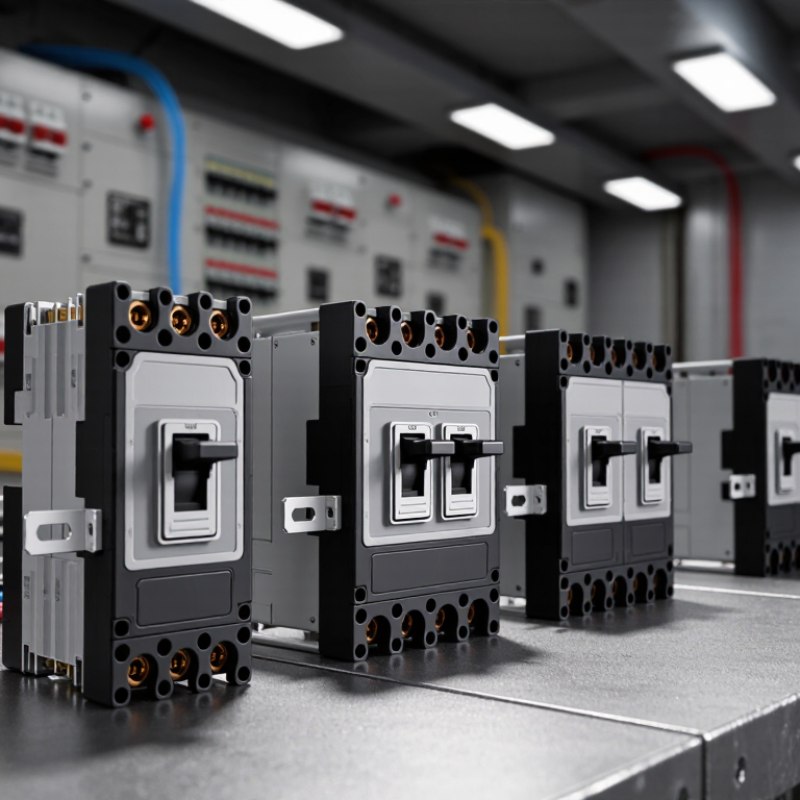
A 125A MCCB is a molded case circuit breaker designed to protect circuits carrying up to 125 amperes. It interrupts current when a serious fault or prolonged overload appears. Inside, thermal protection responds to heat from sustained overcurrent. Magnetic protection reacts almost instantly to short-circuit current. The trip mechanism separates the contacts, while the molded enclosure helps contain heat and electrical arcs. The breaker can then be reset after inspection, if no damage exists.

Tips: Check the system voltage, frequency, interrupting capacity, and pole configuration. Match the trip curve with the actual load. Cable size matters. So does ambient temperature. A 125A rating does not guarantee safe performance in every installation.

For global buyers, the best 125A MCCB is not simply the cheapest or most compact model. Confirm test reports, terminal compatibility, enclosure ratings, and certification documents from reliable suppliers. Field engineers should also examine load diversity, motor starting current, and available short-circuit current. A breaker that works well in a clean indoor panel may need different protection outdoors or in dusty machinery rooms. Installation torque must follow the manufacturer’s instructions, because loose terminals create dangerous heat. Periodic testing is essential, although it is sometimes overlooked. In my experience, one selection mistake often comes from trusting the ampere label alone. Real conditions are less tidy.

Key Specifications to Compare in a 125A MCCB

2026 Best 125A MCCB for Global Buyers?

A 125A MCCB should match the installation, not only the catalog title. Check the rated current, frame size, voltage, frequency, and pole configuration. A 125A trip setting may sit inside a larger frame. This affects heat, enclosure space, and replacement cost. IEC 60947-2 requires verified performance for low-voltage circuit-breakers, including short-circuit testing and trip behavior.

Interrupting capacity deserves close attention. Compare Icu and Ics, not just the highest advertised kA value. Select a rating above the prospective fault current at the installation point. Also review thermal-magnetic or electronic trip units, adjustable overload settings, instantaneous protection, and ambient-temperature derating. The IEA’s Electricity 2024 report forecasts global electricity demand growth of about 3.4% annually from 2024 to 2026. More connected loads can raise coordination risks in compact distribution panels. Field experience shows that poor selectivity causes more disruption than a slightly higher purchase price.

Tips: Request test certificates, wiring diagrams, and clear derating tables. Confirm IEC 60947-2 or UL 489 alignment for the target market. Check terminal capacity with the actual cable size. A certificate alone is not enough. Installation quality still matters. I sometimes find buyers comparing kA figures while ignoring Ics, enclosure temperature, or maintenance access. That comparison looks efficient, but it can fail during commissioning. Leave space for future accessories, such as auxiliary contacts or undervoltage releases.

How to Choose the Right 125A MCCB for Global Applications

How to Choose the Right 125A MCCB for Global Applications

For global buyers, choosing a 125A MCCB starts with the actual load, not the catalog headline. Record motor starting current, continuous load, cable size, and expected temperature. A 125A frame may not support 125A continuously under every installation condition. Check the rated current after derating.

Short-circuit capacity deserves careful attention. Compare the prospective fault current at the installation point with the MCCB interrupting rating. A higher ampere rating does not automatically mean better protection. Select the number of poles, operating voltage, and trip type for the system. Thermal-magnetic protection suits many standard feeders. Electronic trip units offer finer adjustment for complex distribution networks. I have seen projects fail because coordination was checked too late.

Global use also requires documentation discipline. Confirm compliance with the destination market’s accepted standards, such as IEC 60947-2 or UL 489, when applicable. Verify test reports, terminal capacities, enclosure compatibility, and accessory availability. Ambient heat, altitude, humidity, and cabinet ventilation can change performance. Ask for clear derating curves and installation instructions. Do not rely on a translated datasheet alone. A local electrical engineer should review discrimination, cable protection, and fault levels before purchase. This step can feel slow, but replacing an incorrectly selected breaker is slower.

Safety Standards, Certifications, and Installation Requirements

For global buyers, choosing a 125 amp MCCB starts with safety compliance, not catalog appearance. The device should match the applicable market standard, such as IEC 60947-2 or UL 489. Certification markings must be genuine, traceable, and suitable for the intended country. A familiar approval logo alone proves little.

Check the rated voltage, short-circuit breaking capacity, insulation voltage, and trip characteristics. These values must suit the site’s fault level and load profile. In a factory panel, I would verify the available fault current before selecting the breaker. Ambient temperature also matters. Heat inside a crowded enclosure can reduce carrying capacity. That detail is often missed.

Installation requires correct conductor sizing, secure terminal torque, and adequate clearance. Follow the manufacturer’s tested instructions and local electrical codes. Use qualified personnel, insulated tools, and suitable protective equipment during installation and testing. The enclosure should provide the required ingress protection for dust and moisture. Cable bending space deserves attention too. Poor routing can stress terminals and create hot spots.

Before energizing, inspect connections, test the trip mechanism, and record the results. Coordination with upstream and downstream protection should be reviewed, not assumed. I have seen projects where the breaker was correctly rated, but the enclosure and busbar system were not. That mistake can undermine the entire certification basis. Some installations may also require local inspection or additional national approval.

Best Purchasing Practices for International Buyers

For global buyers, choosing a 125A MCCB is a purchasing decision, not only a technical decision. The IEA Electricity 2024 report expects global electricity demand to grow by about 4% annually through 2026. This increases demand for dependable low-voltage protection in factories, buildings, and renewable energy projects. However, the highest rated unit is not always the best choice.

Check the rated operational voltage, frequency, poles, and short-circuit breaking capacity. Compare Icu and Ics values under IEC 60947-2, not only the current rating. Confirm thermal-magnetic or electronic trip performance at the expected ambient temperature. A 125A device may require derating inside a hot enclosure. Request test reports, calibration records, certificates, wiring diagrams, and terminal details. The UNCTAD Review of Maritime Transport 2024 states that shipping carries over 80% of global merchandise trade. Therefore, packaging, moisture protection, spare parts, and delivery terms deserve equal attention. Industry reports guide decisions, but they cannot replace site testing. That is easy to forget.

Tips: Ask for a sample before placing a large order. Verify markings against the certificate. Check whether accessories are interchangeable and available locally. Confirm the actual production date, not only the promised delivery date. Use independent inspection for unfamiliar suppliers. A lower unit price can hide longer lead times, weak documentation, or costly customs delays. I would also compare five-year ownership costs. This step is imperfect, but it often exposes assumptions made too quickly.

2026 Best 125amp MCCB for Global Buyers? - Best Purchasing Practices for International Buyers
Data Dimension Recommended Requirement or Market Benchmark Why It Matters to International Buyers Purchasing Verification
Rated current (In) 125 A continuous rated current, subject to the specified ambient-temperature and installation conditions. Confirms that the breaker is suitable for the intended feeder, motor supply, distribution board, or submain circuit. Request the datasheet, trip-unit setting range, temperature derating curve, and calibration conditions.
Frame size A 125 A unit may use a frame rating above 125 A; the frame size must be confirmed separately from the rated current. Frame dimensions affect panel space, replacement compatibility, terminal arrangements, and accessory selection. Obtain outline drawings, mounting-hole dimensions, terminal orientation, and weight before ordering.
Poles Common configurations are 2-pole, 3-pole, and 4-pole; three-phase systems generally require 3-pole or 4-pole protection according to the system design. The wrong pole arrangement can prevent correct isolation of phases and neutral conductors. Confirm whether the neutral pole is switched, protected, or unswitched, and verify pole pitch and terminal spacing.
Rated operational voltage (Ue) Select the exact system voltage. IEC-based MCCBs commonly have AC ratings up to 690 V, while equipment intended for North American applications is commonly specified up to 600 V; the actual product rating must be verified. Voltage affects insulation coordination, breaking capacity, clearances, and regulatory acceptance. Check the voltage rating at the required frequency, pole configuration, and short-circuit rating.
Frequency 50 Hz, 60 Hz, or 50/60 Hz as required by the destination electrical system. Trip characteristics, accessories, and testing may be frequency-dependent. Include the required frequency on the purchase order and inspection checklist.
Short-circuit breaking capacity Specify the required Icu and, where applicable, Ics under IEC 60947-2, or the corresponding interrupting rating under the applicable North American standard. Typical market options vary widely, often from approximately 18 kA to 100 kA depending on voltage and construction. The breaker must safely interrupt the prospective short-circuit current at the installation point. Use the site fault-current study; never select breaking capacity from amperage alone. Verify the rating at the actual operating voltage.
Trip technology Thermal-magnetic trip units are common for general distribution. Electronic trip units provide adjustable long-time, short-time, instantaneous, and sometimes ground-fault functions. Trip technology determines selectivity, adjustment accuracy, monitoring capability, and total cost. Request trip curves, adjustment ranges, tolerance data, and communication or metering details if required.
Utilization category Under IEC 60947-2, confirm whether Category A or Category B is required. Category B devices are intended to support time selectivity through short-time withstand capability. Correct categorization helps coordinate upstream and downstream protective devices. Ask for the declared category and coordination tables for the complete protection system.
Applicable standards IEC 60947-2 for low-voltage circuit-breakers; UL 489 for circuit breakers used in many North American applications; regional installation rules may also apply. Standards influence testing, markings, documentation, certification, and customs or project approval. Request current test reports, certificates, declaration of conformity, and the exact model-to-certificate relationship.
Terminal and conductor compatibility Terminal capacity must match the selected conductor type, cross-sectional area, insulation diameter, and lug or busbar arrangement. Incorrect terminals can create overheating, poor connection strength, or installation nonconformity. Verify conductor range, lug approval, terminal material, tightening torque, and whether lugs are included.
Installation method Fixed, plug-in, and draw-out versions are available in the market; fixed mounting is generally the simplest and most economical option. Mounting type affects downtime, maintenance access, panel design, and spare-part requirements. Confirm mounting hardware, cradle requirements, interlocks, and compatibility with the existing switchboard.
Auxiliary and control accessories Common options include auxiliary contacts, alarm contacts, undervoltage releases, shunt trips, motor operators, and rotary or extended handles. Accessories support remote operation, emergency shutdown, status indication, and automation. List every accessory, control voltage, contact arrangement, and factory-installed or field-installed requirement.
Environmental conditions Specify ambient temperature, altitude, humidity, pollution degree, indoor or outdoor use, and enclosure rating. An IP rating normally applies to the enclosure or assembly, not automatically to the MCCB alone. Environmental factors can change thermal performance, insulation requirements, corrosion resistance, and service life. Request derating data, altitude limits, storage conditions, corrosion protection, and enclosure certification where relevant.
Testing and inspection Use routine production testing plus document review. For critical projects, add sample inspection or independent pre-shipment inspection. Testing reduces the risk of incorrect ratings, incomplete accessories, damaged insulation, and inconsistent batches. Check serial or batch traceability, insulation test records, mechanical operation, trip operation, markings, and packaging condition.
Documentation package Require an English datasheet, installation manual, wiring diagram, dimensional drawing, trip curve, certificates, and spare-parts list. Complete documentation supports engineering approval, installation, customs clearance, maintenance, and future replacement. Make document delivery a contractual milestone before shipment or final payment.
International logistics Use moisture-resistant packaging, shock protection, clear carton labels, harmonized tariff classification, and agreed Incoterms® 2020. Electrical equipment can be delayed or damaged by incorrect paperwork, impact, condensation, or unclear delivery responsibilities. Confirm gross and net weight, package dimensions, country-of-origin documents, insurance responsibility, and delivery lead time.
Commercial evaluation Compare total landed cost rather than unit price: product, accessories, inspection, freight, duties, taxes, commissioning, spares, and warranty support. The lowest purchase price may become more expensive when certification gaps, redesign, delays, or unavailable spare parts are included. Use a weighted bid sheet covering technical compliance, certification, lead time, warranty, payment terms, and after-sales support.

Article Source: