What Is the Best Automatic Checkweigher to Buy?
Choosing the best Automatic Checkweigher is less about buying the fastest machine and more about matching it to your production line. A compact unit may suit small cartons, while bottles, pouches, and irregular products may need different belts and guides. Begin with product weight, package dimensions, target speed, and the accuracy your process requires. These details matter.
Ask suppliers to test your own products at realistic line speeds. A brochure cannot show every vibration, shifting package, or awkward transfer between conveyors. Small details change results. Check how the reject system handles missed or rejected items, and whether operators can understand its alerts without extra training. Review data connections, cleaning access, installation needs, and local service availability, too.
There is no universal winner. A high-speed model may be unnecessary for a slower line, while a lower purchase price can hide costly integration work. Compare the total cost of ownership, not just the initial quote. If possible, observe a trial and record stable performance across several product types. Ask what happens when weights, packaging, or line conditions change. Then compare documented test results with your actual requirements. One detail is easy to overlook: specifications can vary with product shape and line setup. I would not choose from speed claims alone. The right machine is the one that consistently checks your products, fits your space, and remains practical for the people running it.
What an Automatic Checkweigher Is and How It Works
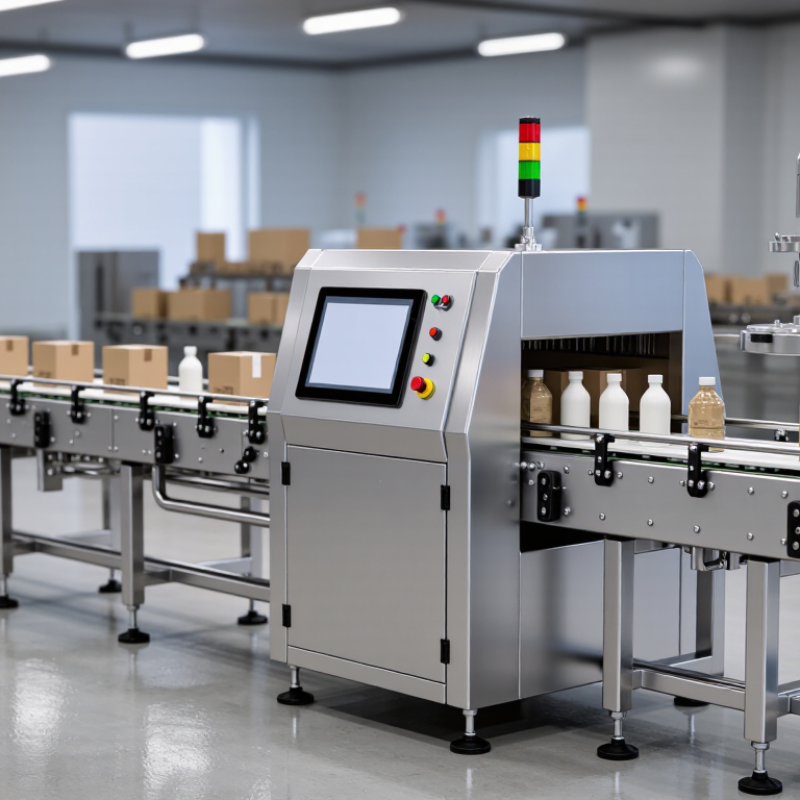
An automatic checkweigher weighs filled packages while they move along a production line. A conveyor carries each item over a load cell, which converts the package’s force into a weight reading. Timing matters: a sensor tracks the item, and software links its reading to that specific package. The system compares the result with a preset target and tolerance range. Too light or too heavy? A timed pusher or air jet can divert the package into a collection bin.
It is a fast inspection, not a complete product-quality test. A checkweigher cannot confirm that a carton contains the right flavor or that its seal is sound. Vibration, uneven belt speed, and product movement can also distort readings. Small details matter. A wet bottle can wobble; a crowded belt can confuse package tracking.
For technical context, OIML R 51-1, the international standard for automatic catchweighing instruments, defines X and Y accuracy classes. Its permissible-error limits depend on load and verification scale interval, not one universal percentage. That distinction is useful when comparing machines: ask for test results using your actual package, line speed, and product conditions. A clean factory demo is reassuring, but it may not represent a noisy production shift.
Key Checkweigher Types and Their Applications
What Is the Best Automatic Checkweigher to Buy?
Key Checkweigher Types and Their Applications
In-motion checkweighers weigh products as they travel along a conveyor. They suit high-speed lines handling sealed cartons, bottles, or snack bags. Choose one with enough belt width and speed capacity for your actual package range. Speed matters. A poorly matched reject mechanism can disrupt production, even when weighing is accurate.
Static checkweighers weigh items at rest, making them useful for slower lines, sampling, and heavier products. Multi-lane systems weigh several small packages in parallel, but need consistent spacing and feeding. Combination systems pair weighing with metal detection or other inspection. They can save floor space, though setup and maintenance become more complex. OIML R 51-1:2006 sets technical and metrological requirements for automatic catchweighing instruments; use its framework when comparing accuracy and verification needs.
Food losses make weight control relevant, but they do not prove a checkweigher alone prevents waste. The FAO’s 2019 report estimated that about 14% of food was lost between post-harvest and retail. UNEP’s 2024 Food Waste Index estimated 1.05 billion tonnes of food waste in 2022. A checkweigher can flag underweight packs and limit excess fill, but results depend on calibration, product flow, and operator checks. Real lines are messier than brochures suggest.
Factors to Assess Before Choosing a Checkweigher
When choosing an automatic checkweigher, start with the product and production line, not the largest speed claim. Record the lightest and heaviest pack, package dimensions, and expected line rate. A small pouch behaves differently from a rigid tray, especially when it bounces or shifts on the belt. Ask what weighing accuracy is achievable at your actual speed and product spacing. Those conditions matter more than a figure measured in isolation.
Tips: Run representative products through a live test. Check changeover time, belt cleaning, calibration access, and reject-bin capacity. Small details matter. Confirm that operators can understand alarms and retrieve weight records without relying on a specialist.
Also assess installation space, conveyor height, and connection needs for your existing line. The reject device should remove an underweight or overweight pack reliably without stopping production unnecessarily. Ask how the system handles missed rejects, product jams, and routine verification. It is easy to overvalue throughput and underweight service access; a hard-to-reach sensor can turn simple cleaning into downtime. A checkweigher can flag variation, but it does not correct a filling problem. Test it with real packaging, and leave room for a result that challenges your assumptions.
How to Match Checkweigher Features to Production Needs
The best automatic checkweigher is the one that fits your actual line, not the one with the longest feature list. Start with product weights, package dimensions, target throughput, and the variation between shifts. A line handling small pouches may need a different belt and weighing range from one carrying heavy cartons. Check how quickly the system settles after a product lands, and whether reject confirmation can catch a missed removal. Small details matter.
The MHI 2024 Annual Industry Report found that 55% of respondents had increased investment in supply-chain technology and innovation. That signals wider interest in automation, but it does not prove every line needs maximum speed. Match the scale’s rated throughput to your real operating rate, including gaps between packs and routine stops. OIML R 51 offers a technical framework for automatic catchweighing instruments; use its relevant performance criteria when comparing specifications. Verify local requirements with a qualified metrology specialist.
Ask suppliers to test representative products at your facility or with your own samples. Include the lightest and heaviest packs, flexible wrappers, and the fastest planned belt speed. Watch for vibration, product bounce, and awkward reject-bin access. Confirm that operators can retrieve weight records without slowing production. I would not trust a polished demo alone. It may use steadier products than your line does. Check cleaning needs, calibration access, and how faults appear on the operator screen before choosing.
How to Compare Models for Accuracy, Speed, and Cost
What Is the Best Automatic Checkweigher to Buy?
Compare models using the products and line conditions you actually have. A specification sheet alone cannot show how a checkweigher handles shifting pack positions, vibration, or uneven product flow. Ask for test results using representative packages, including the lightest and heaviest expected weights. Check the stated accuracy range, but also ask how it was measured and under what conditions. Small details matter.
Speed should reflect your real production target, not just the machine’s maximum rate. Run a trial at your typical line speed and observe whether readings remain stable. Watch the reject mechanism, too: a correct reading is less useful if a package is not removed reliably. Record results across several runs. One successful test is not enough.
Compare total cost, not only the purchase price. Include installation, staff training, routine calibration, spare parts, and expected service needs. Ask how quickly common adjustments can be made and whether maintenance records are easy to review. A cheaper model may cost more over time if support is limited or changeovers take longer. Still, cost estimates can be uncertain; request assumptions in writing and leave room for a production trial before deciding.
What Is the Best Automatic Checkweigher to Buy?
Compare throughput, validate accuracy with your product, and weigh purchase cost against your line’s requirements.
These are calculated examples, not specifications for particular machines. Throughput is estimated as conveyor speed divided by package pitch: 30 m/min ÷ 0.30 m = 100 packs/min, 45 m/min ÷ 0.225 m = 200 packs/min, and 60 m/min ÷ 0.20 m = 300 packs/min. Checkweigher accuracy depends on factors such as product handling, vibration, package spacing, and operating speed, so verify it using your own product at your target rate. Compare total cost, including integration, reject handling, calibration, and maintenance.