
Print Logo

China Top Pump Inverter Manufacturers How to Choose?

Choosing among China’s top pump inverter manufacturers requires more than comparing prices and catalog specifications. A reliable Pump Inverter should match the pump type, motor power, flow demand, pressure range, and operating environment. It must also provide stable speed control, overload protection, clear fault codes, and efficient energy management. Small details matter. A dusty factory, long cable run, or unstable water supply can change the correct selection.

Experienced buyers usually examine the manufacturer’s production records, testing procedures, certifications, and after-sales capability. Ask for technical datasheets, wiring diagrams, sample test results, and references from similar water, HVAC, irrigation, or industrial projects. A serious supplier should explain harmonic control, protection ratings, communication protocols, and compatibility with existing control panels. The answer should be practical, not vague. Request a sample unit when the application is critical.

However, no supplier is perfect. A polished website does not prove field reliability. Even a respected manufacturer may have limited support in your region or inconsistent documentation. I would compare warranty terms, spare-part availability, response times, and commissioning guidance before signing an order. Price deserves attention, but the cheapest inverter may create higher maintenance costs later. Check the complete lifecycle cost.

This guide explores how to evaluate China pump inverter manufacturers with a balanced, evidence-based approach. It considers technical performance, factory experience, customization, quality control, and communication. The goal is not to promote one company blindly. It is to help buyers ask sharper questions, identify realistic risks, and choose equipment that performs reliably under actual working conditions. Some assumptions may need testing. That is part of a sound purchasing decision.
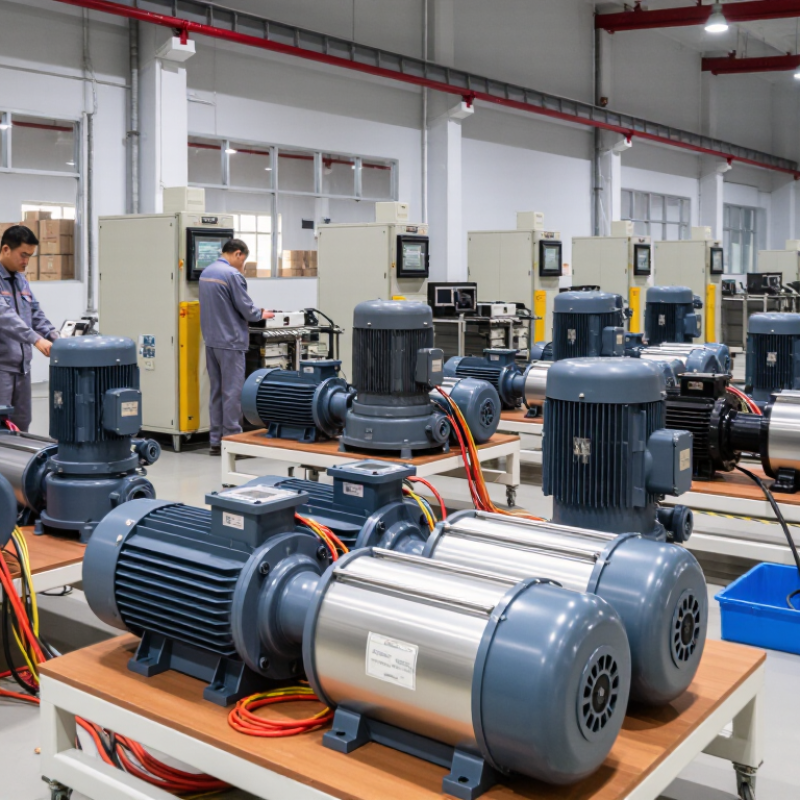
China Top Pump Inverter Manufacturers How to Choose?

What Is a Pump Inverter and Why Does Manufacturer Choice Matter?

A pump inverter, commonly called a variable frequency drive, controls motor speed by adjusting electrical frequency. This allows the pump to match real water demand instead of running continuously at full speed. The U.S. Department of Energy reports that variable-speed control can reduce pumping energy use by 20% to 50%, depending on system conditions. Small changes matter. A pressure sensor, for example, can prevent unnecessary cycling in a building water system.

Manufacturer choice matters because the inverter must survive heat, moisture, voltage variation, and repeated starts. The International Energy Agency estimates that electric motor systems consume about 53% of global electricity. Pump motors represent a meaningful part of that demand. A reliable supplier should provide accurate motor matching, stable PID control, overload protection, dry-run detection, and clear installation instructions. Check IP ratings, EMC compliance, warranty terms, spare-part access, and technical support before comparing prices.

Field commissioning often exposes weak products. A drive may perform well in a showroom but trip beside a long cable or unstable generator. That detail is easy to miss. Choose manufacturers with documented efficiency tests, application records, and traceable quality procedures. Independent reports and standards help, but they cannot replace site testing. A low price remains attractive; however, one failed inverter can waste water, labor, and several days of production. My own rule would be imperfect: judge the supplier by its response after installation, not only by its catalog.

China Top Pump Inverter Manufacturers: How to Choose?

What Is a Pump Inverter and Why Does Manufacturer Choice Matter?

A pump inverter, also called a variable frequency drive, controls motor speed by adjusting output frequency and voltage. When comparing manufacturers, enclosure protection is an important specification because pump inverters may be exposed to moisture, dust, water spray, or outdoor conditions.

The chart shows IEC 60529 water-ingress protection levels. The IP water-protection digit is an identification code rather than a linear performance score: IPX4 indicates protection against splashing water, IPX5 against water jets, IPX6 against powerful water jets, IPX7 against temporary immersion, and IPX8 against continuous immersion under conditions specified by the manufacturer.

Which Technical Features Define a Reliable Pump Inverter?

Reliable pump inverters are defined by control quality, protection, and verified efficiency, not attractive specifications. The IEA reports that motor-driven systems consume roughly half of global electricity, making inverter performance an important energy decision. A dependable unit should provide stable pressure control through a calibrated transducer and fast vector or sensorless control. It should also support smooth acceleration, avoiding pressure shocks in long pipelines.

Protection matters during ordinary failures. Look for dry-run detection, overload protection, phase-loss monitoring, overtemperature alarms, and automatic fault records. These functions help technicians identify a blocked impeller or a damaged cable before serious downtime occurs. IEC 61800-5-2 provides a useful reference for drive-related functional safety. IEC 61800-9-2 also supports efficiency evaluation for adjustable-speed electrical power drive systems.

Energy savings need careful testing. The U.S. Department of Energy notes that pump power can change approximately with the cube of speed under affinity-law conditions. This sounds impressive. Real systems are less perfect. Pipe friction, sensor errors, and frequent starts can reduce the expected benefit. I would therefore check operating curves, EMC performance, IP protection, and low-speed cooling before choosing an inverter. Commissioning records and field service data are more convincing than a simple efficiency claim. A reliable supplier should explain failure limits clearly, even when the answer is inconvenient.

How to Evaluate China’s Top Pump Inverter Manufacturers

China Top Pump Inverter Manufacturers: How to Evaluate Them

Selecting a Chinese pump inverter manufacturer requires more than comparing prices. The U.S. Department of Energy reports that pumping systems consume about 25% of industrial electricity in the United States. The IEA has also estimated that electric motor systems use roughly 53% of global electricity. These figures make efficiency testing commercially important, not merely technical.

Ask manufacturers for measured efficiency curves, overload capacity, input tolerance, and performance at low speeds. A suitable inverter should support PID control, dry-run protection, sleep functions, and common communication protocols. Check whether test records identify the model, load, temperature, and measurement equipment. A glossy catalog is not proof.

Factory audits can reveal wiring quality, burn-in procedures, spare-part storage, and technician training.

Certification should match the destination market and installation environment. Review EMC results, ingress protection, safety documentation, and firmware update controls. Request customer references from similar water, HVAC, or irrigation projects.

Warranty length matters, but response time matters more. Clarify remote support, replacement procedures, and parameter backups before purchasing. A lower quotation may hide engineering changes or weak after-sales service. That risk is easy to underestimate.

I would also compare five-year energy costs, because the cheapest inverter can become expensive under continuous operation. Reports help, but real operating data should still challenge the decision.

What Quality, Certification, and Support Standards Should You Check?

Choosing a pump inverter manufacturer requires more than comparing catalog prices. Check whether the supplier understands pump duty, motor compatibility, pressure control, and local voltage conditions. Ask for documented testing on the exact model, not a similar product. A clear factory inspection process also matters. You should be able to trace serial numbers, components, and final test results.

Certification deserves careful review. Verify ISO 9001 for quality management, while checking CE, EMC, RoHS, or other approvals required in your market. Certificates must match the manufacturer, model range, and production site. A polished certificate is not proof by itself. Request test reports, validity dates, and the issuing body’s verification method. Standards can differ by country.

Support often reveals the real quality gap. Confirm whether engineers can help with parameter settings, dry-run protection, overload alarms, and communication protocols. Reliable suppliers provide readable manuals, wiring diagrams, commissioning guidance, and replacement-part access. Ask for response times in writing. Test the support channel before placing a large order. Slow replies are a warning. One practical trial may include a 30-day field test, measured pressure stability, energy use, and fault recovery. I have found that suppliers sometimes promise perfect performance, while installation conditions remain poorly defined. That deserves honest discussion. A strong partner admits limits, records problems, and improves the design instead of hiding them.

How to Compare Prices, Customization, and Long-Term Value?

China Top Pump Inverter Manufacturers: How to Choose?

When comparing Chinese pump inverter manufacturers, do not judge price alone. Request a complete quotation, including the inverter, control cabinet, sensors, shipping, commissioning, and spare parts. A cheaper unit may use lower-grade capacitors or provide limited technical support. Check efficiency data, overload capacity, protection ratings, and performance at your actual pump load. Ask for test records and application references from similar water systems.

Tips: Compare the five-year cost, not only the purchase price. Include electricity use, maintenance, downtime, and replacement risks. Ask whether firmware updates and remote troubleshooting are available. Small details matter.

Customization can improve value, but unnecessary modifications increase cost and delay delivery. Discuss motor power, voltage, communication protocols, pressure targets, enclosure conditions, and local temperature limits. A reliable manufacturer should explain what can be changed and what cannot. Request a sample parameter file or factory test video before approval. This step may feel slow, yet it can expose control problems early. I have found that technical conversations often reveal more than polished brochures. Still, no supplier is perfect; performance claims should be verified through documented tests and a clear warranty. Long-term value depends on stable operation, accessible service, and parts that remain available after installation.

China Top Pump Inverter Manufacturers How to Choose? - How to Compare Prices, Customization, and Long-Term Value?

Evaluation Dimension Budget-Oriented Option Balanced Industrial Option Long-Term Value Option
Typical Initial Price Usually the lowest purchase price; suitable for basic water-transfer applications with limited control requirements. Moderate price level; normally includes more complete protection, control functions, and documentation. Higher upfront cost may be justified by stronger efficiency, reliability, service support, and application engineering.
Common Power Range Approximately 0.75–7.5 kW for small pumps and light-duty systems. Approximately 5.5–75 kW for commercial buildings, irrigation, water treatment, and general industry. Approximately 30–315 kW or higher for demanding industrial, municipal, and continuous-duty installations.
Input and Output Compatibility Commonly available in single-phase or three-phase input versions, with three-phase motor output. Typically supports standard low-voltage supply systems and common induction motors; confirm voltage and frequency before ordering. Usually offers wider voltage, frequency, motor-control, and system-integration options for complex installations.
Energy-Saving Potential Basic variable-speed control can reduce throttling losses when pump demand varies. Pressure or flow feedback allows the pump to operate closer to actual demand, improving operating efficiency. Advanced control, sleep modes, automatic optimization, and accurate sensor feedback can improve lifecycle energy performance.
Control Functions Basic start/stop, speed adjustment, overload protection, and fault display. PID control, constant-pressure operation, dry-run protection, automatic restart, and multi-pump coordination. Advanced PID functions, cascade control, remote monitoring, fault history, energy records, and application-specific logic.
Customization Capability Usually limited to standard parameters, enclosure options, and common communication settings. May support customized software parameters, terminal layouts, sensors, communication protocols, and enclosure configurations. More suitable for OEM or project-based customization, including control logic, cabinet integration, testing procedures, and documentation.
Protection Features to Verify Overcurrent, overvoltage, undervoltage, overheating, and short-circuit protection should be confirmed. Should normally include overload, phase-loss, dry-run, stall, overheating, and sensor-failure protection where applicable. Should include comprehensive electrical and application protection, event records, alarm handling, and coordinated system safeguards.
Enclosure and Installation Standard indoor enclosure is often adequate for clean, dry environments. Choose an appropriate ingress-protection level for dust, moisture, and installation location; IP ratings must be verified from technical documents. Outdoor, corrosive, dusty, or washdown environments may require a higher-rated enclosure, cabinet ventilation, or a dedicated control cabinet.
Harmonic and EMC Considerations Basic installations may require additional attention to cable routing, grounding, and electromagnetic compatibility. Verify EMC design, input reactors, filters, cable length limits, and installation instructions for sensitive equipment. For large or critical systems, evaluate harmonic mitigation, EMC compliance, power-quality impact, and compatibility with the complete electrical network.
Communication and Monitoring Local keypad and relay outputs are generally sufficient for simple applications. Common industrial communication options may include RS-485-based protocols, analog signals, and digital inputs. May support PLC, SCADA, building-management, or cloud-connected monitoring; compatibility must be confirmed for the specific project.
Factory Testing and Documentation Check whether the supplier provides wiring diagrams, parameter lists, user manuals, and basic test records. Request product datasheets, inspection reports, parameter backups, commissioning instructions, and applicable conformity documents. For critical projects, request a formal inspection plan, application test records, traceability documents, drawings, and commissioning procedures.
Typical Lead-Time Consideration Standard models are often easier to source, but availability can vary by power rating and export destination. Standard configurations commonly require additional time for parameter setting, inspection, and export preparation. Customized systems generally require longer engineering, testing, approval, and production time than standard products.
Warranty and Service Review Compare warranty duration, exclusions, replacement policy, and response time rather than relying only on the lowest price. Evaluate remote commissioning, troubleshooting support, spare-parts availability, and service coverage in the destination market. For continuous-duty systems, prioritize documented service procedures, local technical capability, spare-parts planning, and escalation support.
Maintenance Requirements Requires correct ventilation, clean surroundings, secure terminals, and periodic inspection of cooling components. Maintenance should include checking fans, filters, cable connections, fault history, motor insulation, and operating parameters. Planned maintenance, parameter backups, condition monitoring, spare-unit strategy, and technician training can reduce downtime risk.
Total Cost of Ownership May be economical for low operating hours, simple loads, and non-critical applications. Often provides a practical balance between purchase cost, energy consumption, functionality, and serviceability. Can offer the best lifecycle value when energy use, downtime, customization, compliance, and long service life are significant factors.
Best Selection Method Choose only after confirming motor rating, pump duty point, supply voltage, protection functions, and installation conditions. Compare complete technical specifications, delivered price, testing, communication functions, warranty, and commissioning support. Use a lifecycle-cost assessment that includes energy consumption, expected operating hours, downtime impact, maintenance, spare parts, and integration costs.

Comparison note: Actual prices, efficiency, lead times, warranty terms, certifications, and customization scope vary according to power rating, order quantity, enclosure, control functions, destination requirements, and project conditions. Always request a current technical datasheet and a written quotation for the exact pump inverter configuration.