What is a Regulated Power Supply and How Does it Work?
A Regulated Power Supply is a crucial device in electronic systems. It ensures stable voltage and current levels to various components. Many devices require specific power conditions to function properly. Fluctuations in power can damage sensitive parts. Understanding how these supplies work helps in various applications.
In essence, a Regulated Power Supply maintains a constant output voltage. It achieves this by adjusting the input voltage to meet the required levels. For example, when the load changes, the supply reacts quickly. This prevents under-voltage or over-voltage situations. Users often overlook this aspect, assuming all power sources are equal.
Interestingly, not all regulated supplies are created equal. Different types exist, with varying efficiency and performance. Some may not respond as needed, leading to operational issues. Users should consider their specific needs when choosing a supply. Reflecting on these details can lead to better device choices in the long run.
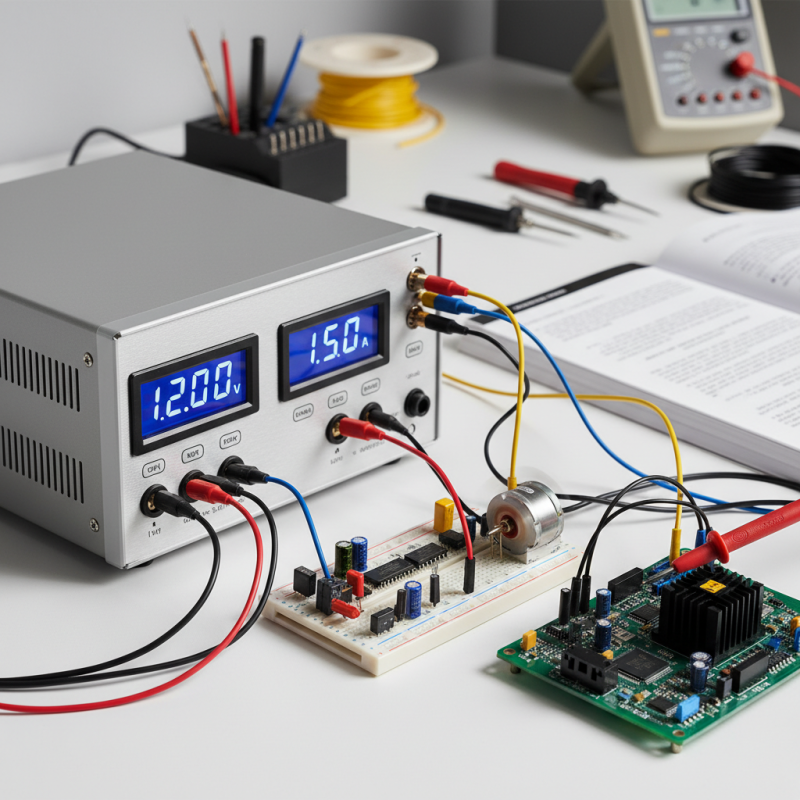
What Is a Regulated Power Supply? Definition and Purpose
A regulated power supply is a critical component in modern electronics. It ensures that devices receive a consistent voltage level. This consistency is vital. Voltage fluctuations can damage sensitive components. A regulated power supply typically maintains output voltage within a narrow tolerance range, often less than ±5%. In industries like telecommunications and computing, this precision is crucial for performance.
According to a report by Research and Markets, the global market for regulated power supplies is expected to grow at a CAGR of 6.7% from 2021 to 2026. This growth is driven by increasing demand for high-quality power solutions. Industries seeking reliability are investing heavily. For example, healthcare devices require stable power to ensure accurate results.
Despite this demand, not all regulated power supplies are created equal. Some models may have efficiency issues, wasting energy. Others might suffer from thermal issues, which can lead to failure over time.
Choosing the right regulated power supply is complex. Factors such as load capacity and environmental conditions need careful consideration. Many options are available, yet not all will meet specific requirements. Designers often grapple with the challenge of balancing performance and cost. It's essential to weigh the benefits against potential drawbacks. This ongoing reflection is key to optimizing power supply selection.
Key Components of a Regulated Power Supply: An In-Depth Overview
A regulated power supply is essential for providing stable voltage and current. At its core, it contains several key components. These include a transformer, rectifier, filter, and voltage regulator. Each part plays a significant role in ensuring consistent power output.
The transformer steps down high voltage AC to a lower level. This makes it safer for use in electronic devices. The rectifier then converts AC to DC, a crucial step for many applications. Afterward, the filter smooths out the fluctuations in electricity, reducing noise. Lastly, the voltage regulator adjusts the output voltage to a precise level. This is vital for sensitive electronic components.
Understanding how these parts interact is important but can be challenging. Designing a regulated power supply requires attention to detail. Any miscalculation in component ratings can lead to unstable output. This unpredictability can damage connected devices. It's a reminder of the delicate balance in electronics engineering.
Voltage Regulation in Different Power Supply Types
This chart illustrates the output voltage stability percentage of different power supply types and regulators. Linear power supplies and linear regulators demonstrate higher stability compared to their switching counterparts.
How Does a Regulated Power Supply Maintain Output Voltage Stability?
In an electronic circuit, maintaining a stable output voltage is crucial. A regulated power supply achieves this by using feedback mechanisms. These mechanisms continuously monitor output voltage. If the voltage deviates from the desired level, the system adjusts accordingly. This is often done using transistors or operational amplifiers. The design can become complex, and mistakes may lead to output fluctuations.
Regulated power supplies face challenges in real-world applications. Variations in input voltage and load conditions can create instability. For example, a sudden increase in current demand may cause the output to sag. The power supply must respond quickly to minimize this effect. Additionally, poorly designed circuits can introduce noise, affecting performance. Engineers need to test thoroughly to identify such issues.
Overall, the effectiveness of a regulated power supply lies in its ability to adapt to changing conditions. Simple designs may not handle all scenarios well. It’s important to balance complexity and reliability in the design. Each application has unique requirements that engineers must consider carefully. The goal is always to achieve stable output voltage under diverse conditions.
Types of Regulated Power Supply: Linear vs. Switching
Regulated power supplies are vital for many electronic devices. They maintain a constant output voltage. This stability is essential for reliable operation, especially in sensitive electronics. Among the various types, two main categories exist: linear and switching power supplies.
Linear power supplies provide a steady voltage through simple circuitry. They are known for low noise and easy design. According to industry reports, about 30% of power supplies in use today are linear. However, they are not very efficient, especially at higher voltages. These supplies can generate excess heat, needing large heat sinks.
Switching power supplies, on the other hand, offer higher efficiency by rapidly turning on and off. They consume less power and produce less heat compared to linear types. It’s reported that switching power supplies account for over 70% of the market. Despite their popularity, they can introduce electrical noise, affecting sensitive equipment. This noise issue needs careful design considerations. Balancing efficiency and noise reduction is a common challenge in modern applications.
Applications of Regulated Power Supply in Various Industries and Sectors
Regulated power supplies play a crucial role in various industries. In healthcare, consistent voltage is vital for life-saving equipment. Failure to provide stable power can lead to serious consequences. According to a recent report, around 30% of medical device malfunctions are linked to power supply issues. This emphasizes the need for reliable power sources in hospitals and clinics.
Manufacturing also heavily relies on regulated power supplies. Equipment such as robots and CNC machines require precise voltages. Inconsistent power can result in faulty products. A study found that power disturbances contribute to an estimated loss of $150 billion annually in manufacturing. This shows that investing in high-quality power supplies is essential for operational efficiency.
In telecommunications, regulated power is critical. Network outages can occur due to power fluctuations, disrupting services. Statistics indicate that over 70% of service disruptions stem from power-related issues. Companies must adopt robust power supply systems to maintain connectivity. Overall, the diverse applications highlight the importance of regulated power supplies across sectors. Each industry faces unique challenges related to power stability. Enhancements are continually needed to address these issues.